
Editorial disclosure: I run Datify’s dating-offers vertical. This article reflects what I see on our offer-relationship side of the desk; affiliates’ results vary by traffic source, funnel, and ad-account health.
The best GEOs for dating offers in 2026 are not the GEOs with the highest headline payout. They are the GEOs where the four-way intersection of advertiser scrub-rate, traffic-source policy fit, payment-rail latency, and local data-protection compliance produces the highest realised eCPM for a publisher who can still buy traffic ninety days from now. I sit on the network side of that math every week — I see what the advertiser pays after scrub, what the publisher modelled before they started, and where the two numbers diverge. The diverging GEOs are where most of this guide lives.
Key Takeaways
- Tier-1 (US/UK/CA/AU) still owns the highest CPA — SOI/DOI $4–8, PPS $60–$75 on premium brands like Ashley Madison and Victoria Milan — but ad-account longevity, not ratecard, is the real cost line.
- EU Tier-1 (DE/FR/IT/ES/NL/Nordics) is a compliance gauntlet after the ePrivacy Regulation was withdrawn in February 2025. National rules now diverge, and German cookie accept rates under 25% break conversion measurement on funnels that rely on client-side tracking.
- Tier-2 Brazil is the 2026 favourite for ROI-minded publishers, but Pix’s seconds-window attribution will silently misattribute revenue if your tracker batches postbacks.
- Tier-3 (BD/PK/NG/IN/EG/KE) is volume-rich and fraud-saturated. Net-of-fraud realised eCPM — not the $0.30 SOI ratecard — is the only honest metric.
- There is no “best GEO.” There are GEO + traffic-source + funnel + tracker combinations that survive scaling, and there are GEOs that don’t. This guide is about telling them apart.
What makes a GEO actually “best” for dating offers in 2026?
When a new publisher asks me for the “best GEO” in the dating vertical, my first counter-question is “best on which axis?” Three operators with three different ad-account inventories give three different correct answers. A publisher with aged US BMs will tell you the PPS economics on Ashley Madison or Victoria Milan are untouchable. A push-traffic publisher pumping Pushground or PropellerAds will tell you Brazil and the Philippines pay rent. A solo affiliate who lost a US ad account last quarter and is now buying Adsterra pop into BD/PK will tell you Tier-3 is where the money is — and they’ll show you a spreadsheet modelled at ratecard rather than at realised eCPM after a 55% scrub.
The framing that holds up on the network side: a GEO is best for you when advertiser CR × payout × (1 − scrub-rate) − (traffic cost + account cost + compliance cost) is positive over a 90-day horizon, not a one-week test budget. Every layer has GEO-specific risk attached, and the rest of this article walks each one.
For the broader vertical context — offer types, network selection, payout models — our dating affiliate programs complete guide sets the parent frame; for buy-side channels per GEO, the dating traffic sources complete guide is the sibling pillar.
Which Tier-1 GEO has the best dating payout in 2026?

The premium-payout chart in 2026 still puts the US, UK, Canada, and Australia at the top, and there’s little movement on which brands anchor it. CrakRevenue’s public listings put Ashley Madison at $65 PPS across 51 GEOs, Adult Friend Finder at $60 PPS across 24 GEOs including the full Anglo Tier-1 set, and Victoria Milan at $75 PPS worldwide — the highest mainstream-affair PPS rate I can name on a public docs page. Tier-1 SOI/DOI bands sit at $4–8 typical, with LoveFort at $7 web / $5 mobile and CuteOrSlut covering the same US/UK/CA/AU set. CrakRevenue publishes 65% lifetime RevShare on selected exclusives, which matters more than peak CPA for publishers with retained user bases.
The piece I never see in competitor pillar pages: the order of those four GEOs by realised eCPM after scrub and account cost is not the order by headline payout. The UK consistently lands higher net than the US on Meta because UK ad-account warmup completes faster, and AU pulls ahead of CA on push because the audience converts at noticeably higher CR on adult-leaning offers despite a smaller raw population. The practical answer: Tier-1 SOI $4–8, Tier-1 PPS premium tops near $75 on affair, and realised lands 12–22% below ratecard on a clean publisher, 30–55% below on a publisher whose subID inventory hasn’t been cleaned in a while.
Why isn’t Tier-1 always the right answer for dating affiliates?
Four reasons, all of which I’ve watched bite publishers in the last twelve months.
Meta’s written-permission gate. Dating ads on Meta require prior written permission, 18+ targeting, and exclusion of casual-sex / mail-order-bride / sugar-baby / affair-facilitation / fake-profile positioning — per Meta’s Transparency Center dating-ads policy and the Meta Business Help Center entry on dating advertising policy. The application takes two to six weeks in our publishers’ experience, and the rejection rate for smartlink-style LPs running rotating advertisers is high enough that most successful Tier-1 Meta operators run single-advertiser direct deals rather than network smartlinks.
Policy-update churn in 2026. Meta has run an unusually large revision cycle on ads policy in 2026 — the most active period since the Special Ad Category rollout. Even when your account is approved, you eat collateral bans on age and relationship-status proxy targeting. The bans clear on appeal, but only if you have appeal flow, which most solo affiliates do not.
Account-warmup TCO nobody books on their P&L. Operators on AffiliateFix’s mainstream-dating threads have been consistent through 2024 and 2025: US/UK warmed BM accounts trade at $80–$300 each, AU and CA slightly lower, and the agency fee for a properly maintained Business Manager runs around $400/mo on top. None of that shows up in the ratecard side. A Tier-1 dating account-shop bill is the single hidden line that decides whether your headline $7 CPL is actually a $7 CPL.
US compliance churn that hits the LP, not just the ad. CCPA 2026 amendments took effect 1 January 2026, mandating visible opt-out and Global Privacy Control honouring. Under the amended definition, sharing data with an affiliate counts as a “sale” unless the affiliate is contracted as a service provider — so the dating LP privacy policy now needs to name the network and the conversion-data flow in language most affiliates haven’t updated since 2022. We get a steady trickle of advertiser pause-emails on US traffic specifically because the publisher’s privacy policy hasn’t caught up with the GPC requirement.
Tier-1 is “the best GEO” only for operators who can absorb both the account cost and the compliance cost. For everyone else, the Tier-1 ratecard is bait.
How do European Tier-1 GEOs (DE, FR, IT, ES, NL, Nordics) actually compare on dating ROI?
CrakRevenue and AdsEmpire both anchor their top-GEO pitches with US/UK/France/Germany; payouts mirror Anglo Tier-1: SOI/DOI $3–6, PPS $40–$65 on mid-tier offers. The arithmetic looks similar. The execution does not.
What breaks European dating ROI is not creative localisation cost — it’s measurement. German cookie accept rates under TTDSG §25 are the lowest in the EU, well under 25% on most dating-LP cohorts our publishers measure. When three quarters of your audience never consents to the analytics cookie, the client-side tracking your tracker depends on collapses; conversion measurement on dating funnels falls back to server-side or to nothing. If you don’t have server-side fallback wired before scaling in Germany, you’re flying blind on creative iteration. France is structurally similar with added enforcement weight: CNIL fined Google €325M and Shein €150M in September 2025 for cookie-consent violations, and Article 82 of the French DPA transposes ePrivacy locally. Those fines land on advertisers, not just publishers, which is why DE/FR advertisers pause offers faster than US advertisers when an LP’s consent layer is wrong.
The native-language ceiling is the other hidden cost. Real native DE/FR LP review — not a $30 Fiverr pass — runs $300–$600 per LP in our experience with EU-localising publishers. That hurts low-priced SOI badly. Most operators I work with run English LPs across the Netherlands and the Nordics and accept a 15–25% CR drag versus native, because the math works out compared to paying a German review on every creative cycle.
What changed in EU compliance for dating offers after ePrivacy Regulation was withdrawn?

One of the edge cases competing pillar pages still get wrong. The ePrivacy Regulation — the long-promised harmonisation — was withdrawn in February 2025. National implementations of the ePrivacy Directive (2002/58/EC) continue alongside GDPR, and member states are diverging rather than converging. There is no unified EU cookie/tracking framework on the horizon.
Practical consequences for dating-vertical compliance: Germany’s TTDSG §25 requires explicit consent in parallel with GDPR for personal data — two consent layers, not one. France’s CNIL is the most active enforcer and the most expensive to fail. Age verification under GDPR Article 8 requires parental consent below national thresholds (13–16 depending on member state) — for dating apps that means a DOB gate placed before the cookie banner, not after; get the order wrong and you’ve collected personal data without lawful basis. EU age-verification wallets are in pilot under the Digital Services Act.
DSA transparency reporting is what most affiliate guides miss. The first harmonised DSA transparency reports were due in early 2026, with data collection having started 1 July 2025 — per the European Commission’s two-year DSA review. The reporting requirements are scoped to Very Large Online Platforms (>45M EU users), but ad-labelling obligations inherit down to sub-VLOP dating operators. If your advertiser is consumer-facing in the EU, the ad-disclosure requirements on your creatives now have a regulatory hook beyond GDPR.
Which Tier-2 GEO converts best for dating in 2026 — Brazil, Mexico, or the Philippines?
It depends on which axis you optimise for, and I’ll say which input flips it. For absolute CR on a localised LP, the Philippines wins on smartlink fed by adult and pop networks. For ratecard per native-language LP, Brazil wins — AdsEmpire actively pitches BR for max profit, and afflift LATAM threads have been calling BR “a huge GEO for dating offers at the moment” through 2024–2025. For creative reuse across multiple GEOs, Mexico wins, because a Spanish-language LP scales across MX/AR/CL/CO/PE on a single creative cycle, provided you avoid Argentine voseo on a Mexico audience.
The number new BR publishers underestimate is the localisation lift. A properly Pt-BR localised LP runs 30–50% CR over an English LP fed the same traffic — the gap between a viable test and a dead test. Spanish-LATAM is the second-best return on localisation effort: one es-419 pass covers MX/AR/CL/CO/PE if you skip Argentine register, roughly 60% of LATAM dating volume on a single LP cycle.
Every Tier-2 dating guide should say this and almost none do: long-tail attribution windows. Tier-2 mobile-heavy markets see install-to-conversion windows that stretch 7–30 days versus Tier-1’s 24–72 hours. Configure a 7-day cookie window and run a Brazilian Pix-paying offer, and you under-credit your own conversions, under-pay your top sub-IDs, and shave your own scaling fuel. Fix: 30-day window minimum on Tier-2 dating and edge-hosted tracking, set deliberately at test start, not after.
Why does Brazil require a different attribution window for Pix-paying dating funnels?
Where most BR-curious affiliates burn their first test budget, and I see it on the advertiser-side reconciliation report every month. Pix is governed by LGPD; payment institutions must hold ≥5M BRL net equity from 1 January 2026, and Pix Parcelado rules updated October 2025 — straight from the Chambers & Partners 2026 Brazilian banking practice guide. The tracker-relevant fact: Pix moves user-to-merchant in seconds, not the 24–72 hours of a card authorisation. Conversion-to-cash is effectively instant.
Why that breaks tracking: trackers that batch S2S postbacks every 5–15 minutes (a common default) issue a postback well after the user has paid, returned to the LP, optionally generated another conversion, and bounced. Attribution shorter than the session arc misattributes. Fix: drop postback batching to real-time on BR, push the cookie window to 30 days minimum, and confirm with your advertiser that the conversion event fires at Pix-confirmation, not cart-creation. If they fire at cart-creation, half your “conversions” are pre-payment intent and the advertiser scrubs them retroactively. We see this on reconciliation every cycle: publisher books revenue on cart events, advertiser pays on confirmed-Pix events, dispute lands on us in week four.
LGPD compliance is the other underestimated line. The ANPD became a regulatory agency in 2025 with expanded enforcement teeth — DLA Piper’s Brazil chapter walks the current state. Breach notification within 72 hours, DSR fulfilment within 15 days, and dating-LP privacy policy text in Portuguese, not auto-translated from English.
How do Indonesia and Philippines mobile-network quirks break click-redirect chains?
One of the most expensive technical landmines in Tier-2 and almost nobody publishes about it because nobody has tcpdump’d a Manila or Jakarta click flow on a Wednesday afternoon and watched what their tracker does.
Philippines mobile networks throttle redirect chains over three hops. Long tracker chains — typical when you stack a click-tracker, smartlink router, and advertiser-side redirect — lose 12–20% of clicks before they ever hit the LP. These are not bot clicks. They’re real users on real devices whose mobile carrier dropped the second-or-third redirect and returned nothing. Fix: collapse the redirect chain to one or two hops, ideally by pre-resolving the smartlink decision server-side before issuing the user’s redirect. Operationally cheap, technically annoying because most smartlink routers expect to be in the click path.
Indonesia adds DNS-interception. Mobile-network DNS interception on 3G/4G in Indonesia adds 200–400ms of latency on redirect lookup. A tracker in São Paulo or US-East shows attribution lag long enough to break short-window models — a Jakarta user can finish a session before your postback has decided which sub_id_5 to attribute. Fix: edge tracker in Singapore or local Indonesia hosting. Mordor Intelligence’s Indonesia mobile-payments report confirms the e-wallet landscape (GoPay, DANA, OVO, ShopeePay, LinkAja sharing ~70% of digital payments with no single wallet over 25%), so the user’s payment session spans multiple wallet redirects on top of yours, compounding latency. Edge-hosted tracking is non-optional on ID dating at scale.
The Philippines payment side is dominated by GCash, Maya, and GrabPay, with GCash leading merchant acceptance. The redirect issue affects all of them equally; the fix is the same.
Which Tier-3 GEOs justify the fraud exposure for dating affiliates?
Tier-3 dating is a volume play where realised eCPM beats Tier-1 only when traffic costs are an order of magnitude lower and the publisher’s fraud-handling discipline is real. The headline payouts are not the metric.
Click-farm economics on the user side: $10 buys 1,000 manual likes in Bangladesh — a benchmark referenced in the Wikipedia entry on click farms and corroborated across fraud-detection vendor literature. Farms cluster in Bangladesh, Pakistan, India, Thailand, and parts of Africa and South America. INTERPOL’s Operation Contender 3.0 (July–August 2025) made 260 arrests across 14 African countries, identified 1,463 victims, USD 2.8M in losses, and dismantled 81 cybercrime infrastructures (Ghana led arrests at 68; Côte d’Ivoire led victim count at 809). On the receiving end, the US FTC reported $1.16B lost to romance scams in the first nine months of 2025, with nearly 60% of reports originating on social media.
The downstream effect for affiliate operators: when you source US-side traffic-quality from BD/PK push, you inherit advertiser scrub-rates of 35–60% that obliterate the headline payout. An $0.80 CPL with 60% scrub realises $0.32. A Tier-1 $5 CPL with 10% scrub realises $4.50. Tier-3 wins only on absolute volume against very cheap traffic, and only if you run the fraud-detection layer yourself rather than waiting for the advertiser to scrub for you. Pakistan and Bangladesh remain highest-volume sources for our network; Nigeria and Kenya are higher-risk, lower-realised.
What publishers underestimate: Tier-3 SOI commonly prices at $0.10–$0.80, and the user-side rails (UPI in India, JazzCash in Pakistan, Fawry in Egypt) integrate into US-built dating LPs poorly. Conversion drop-off at the payment step is 50%+ when a US-built funnel doesn’t carry localised payment options — even clean traffic shaves itself.
How does India’s DPDP Act 2023/2025 change dating-app affiliate operations?
The DPDP Rules notification of November 2025 is the most consequential dating-vertical compliance shift since GDPR for any operator with India traffic, and the staggered dates are where competing guides go wrong. Per the India MeitY notification: the Data Protection Board operative from 13 November 2025, consent managers from 13 November 2026, full substantive compliance from 13 May 2027.
Operational consequences for dating apps and affiliates: Section 12 right-to-erasure forces deletion of shadow profiles on user request — a category dating networks historically kept for re-engagement. Section 6 purpose-limitation means matchmaking-only processing, no behavioural retargeting after deletion. Cross-border data transfers are restricted to government-approved jurisdictions, with direct implications for any dating advertiser pushing IN traffic into US-hosted infrastructure. Penalties scale to ₹250 crore (~USD 30M). Significant data fiduciaries face a three-year deletion timeline on retained user data.
Practical affiliate-operations impact: localisation of consent and erasure UX is non-optional from May 2027, and tracker postback retention windows must be configured to no more than three years. If your postback log database is keeping data forever, you have an architectural problem to solve before May 2027, not after.
Where do the dating-scam farms actually live, and how do I debug GEO-level fraud on the network side?
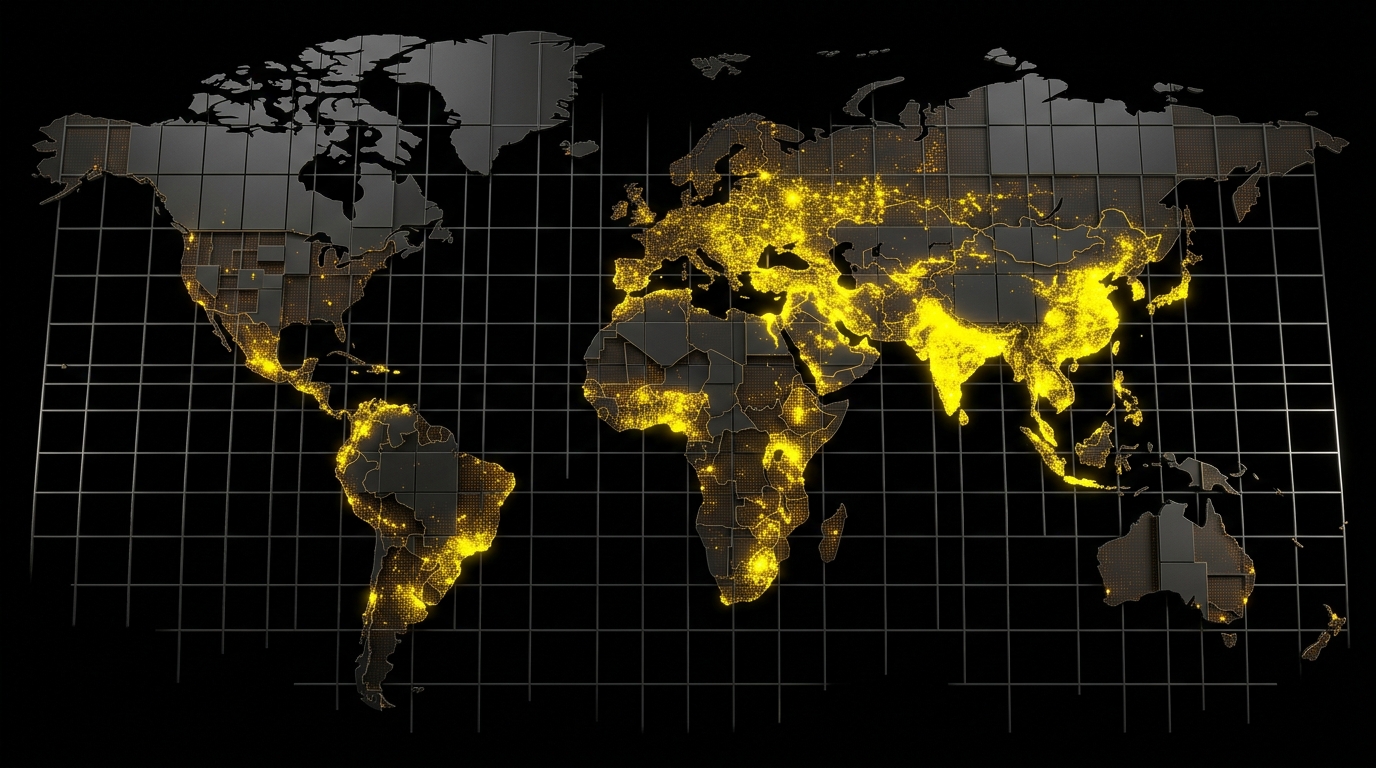
The geography of dating fraud has been well-mapped in 2025 research. Manual click-farms cluster in Bangladesh, Pakistan, India, Thailand, and parts of Africa and South America — real-device, low-wage, rotated-SIM/profile operations. Romance-scam factories concentrate in West Africa (Nigeria, Ghana, Côte d’Ivoire) and East Africa (Kenya, Uganda) per the INTERPOL Op Contender 3.0 disclosures. The Yahoo Boys and Sakawa Boys ecosystem — Nigerian and Ghanaian organised rings active on dating-affiliate platforms — runs primarily through young operators (>80% under 26, ~60% on iPhone hardware per Conversation Africa research). Moody’s-referenced data puts Nigeria at approximately 14% of detected fraud profiles globally. The 2026 emergent vector is AI-generated dating profile photos, which defeat the reverse-image-search filters dating networks have relied on since 2018.
The debug workflow that actually matters on the network side runs through three observables. First, postback-by-GEO log filtering — pull S2S postbacks for the GEO in question, filter by sub-ID structure, and visualise click distributions per device and per IP/24. Anomalous distributions in BD/PK push traffic surface quickly once a farm starts. Second, cross-signal validation. Trackers like Keitaro expose multiple sub_id parameters you can thread through the click and postback chain; passing the user’s real IP through one of them (Keitaro’s {ip} macro is the common pattern) into sub_id_7 keeps the genuine client IP intact so CAPI and attribution see the genuine client IP across GEOs after a redirect chain has stripped or rewritten the apparent IP, while sub_id_12 can carry an optional upstream quality signal. Layered fraud detection then combines that IP signal with device and behavioural signals rather than relying on any one of them. Third, scrub-window tracking against advertiser reconciliation cadence — Tier-1 conversions reconcile inside 30 days typically, Tier-2 and Tier-3 on 14–45 day cycles. If your dashboard shows realised eCPM stable on Tier-1 and oscillating on Tier-3, the scrub window is mismatched against the reconciliation cadence, not against the traffic quality.
Our affiliate-management team’s observation, not a formal export: when we onboard a new dating publisher running BD or PK push, we cap initial offer-payout exposure at the Tier-3 ratecard’s 50% scrub assumption until 30-day data lands. Publishers complain about this every time. They complain less after they see their first reconciliation cycle.
Which GEO-to-traffic-source combinations actually scale in 2026?
The accessibility matrix I work from on the network side, simplified:
| GEO cluster | Tier-1 ad account viable? | Local rails matter? | Realistic traffic-source mix |
|---|---|---|---|
| US, UK, CA, AU | Yes — direct (FB written approval) | No | Meta direct, Google search, native, premium push |
| DE, FR, IT, ES, NL, Nordics | Yes — localised LP + consent layer | SEPA advertiser-side | Meta (with EU consent stack), native, search |
| BR | Yes — Pix-aware LP, Pt-BR localisation 30–50% CR lift | Yes — Pix postback | Meta, TikTok, push, smartlink |
| MX, AR, CL, CO, PE | Yes — single es-419 LP scales | No | Meta, TikTok, push |
| PH, MY, TH | Smartlink fine; native LPs lift CR; collapse redirect chains | GCash/GrabPay advertiser-side | Adsterra, PropellerAds, pop, smartlink |
| ID | Edge tracker (SG) non-optional; ID-local LP | GoPay/DANA | Push, pop, native |
| TR | Yes — FX locked at offer-creation | Lira/USD reconciliation discipline | Meta, push |
| IN, BD, PK | Heavy scrub; cap publisher exposure on day one | UPI/JazzCash advertiser-side | Push, pop, adult |
| NG, KE, EG | Volume only; realised eCPM ≤30% headline | Marginal | Pop, adult, limited push |
The deeper channel detail per GEO lives in our dating traffic sources complete guide. The point of this matrix is the simpler one: not every GEO is reachable from a Tier-1 ad account, and not every Tier-1 ad account is stable inventory for a solo affiliate.
The combination that consistently survives 90 days at scale: publisher controls the ad-account inventory, tracker is hosted in-region or at an edge close enough to the user, LP is localised by a native speaker, and the attribution window is set per GEO rather than left at the tracker default. Four discipline lines, all learnable, all skipped by the publishers who tell me a GEO “doesn’t work” after a one-week test.
What’s the most overlooked compliance landmine per GEO cluster in 2026?
The landmines I see surface most often on advertiser pause emails right now: for US, the CCPA 2026 amendments’ GPC-signal requirement and the sale-definition of affiliate data sharing — most dating LPs we audit have privacy policy text that hasn’t been touched since 2022 and now reads non-compliant. For EU/UK, the ePrivacy Regulation withdrawal in February 2025 means national divergence is the new normal, and the DSA transparency reporting cycle that started in early 2026 applies to dating affiliates via ad-labelling inheritance from advertisers. For Brazil, the LGPD enforcement teeth the ANPD developed in 2025 and the Pix net-equity threshold of 5M BRL from January 2026 both reshape which advertisers stay in market. For India, DPDP staggered dates (Board operative November 2025, consent managers November 2026, full compliance May 2027) — most blog posts cite a single wrong date. For Meta dating-ads markets globally, verify your advertiser’s written-permission status is current rather than 2024-vintage before you scale spend.
The reading I’d give a publisher new to this vertical: pick the GEO cluster where you can absorb both the ad-account cost line and the compliance cost line. Everything else — payout, CR, traffic quality — sorts itself out from there.
FAQ
Q: What is the highest-paying GEO for dating offers in 2026?
A: On public network listings the highest mainstream dating PPS payouts sit in Tier-1 — Victoria Milan at $75 PPS worldwide, Ashley Madison at $65 PPS across 51 GEOs, Adult Friend Finder at $60 PPS across 24 GEOs including US/UK/CA/AU. Tier-1 SOI/DOI ranges $4–8. The headline numbers are accurate but the realised eCPM after scrub, account cost, and compliance overhead typically lands 12–30% below ratecard for clean publishers and 30–55% below for publishers running unmaintained subID inventory.
Q: Is Brazil a better GEO than the US for dating affiliates in 2026?
A: It depends on your ad-account inventory. The US ratecard is roughly 60% higher than Brazil on mainstream dating PPS, but US Facebook account churn and CCPA-2026 compliance overhead push the realised-net-cost ratio in Brazil’s favour for publishers who have already lost their US ad accounts. Brazil also requires Pt-BR localisation (30–50% CR lift over English), edge-hosted tracking, and a 30-day attribution window for Pix-paying funnels — without those four discipline items Brazil under-performs the US.
Q: Why do publishers’ Tier-3 dating campaigns underperform model projections?
A: Advertiser scrub-rates on BD/PK push-sourced US-side traffic land at 35–60% — meaning an $0.80 SOI CPL realises $0.32 net. Publishers who model at ratecard rather than at net-of-fraud realised eCPM overestimate Tier-3 ROI by roughly the inverse of their scrub rate. The fix is to model at the advertiser’s known per-GEO scrub band, not at headline CPL, and to run an in-house fraud-scoring layer (device, IP, and behavioural signals) rather than waiting for the advertiser to scrub for you.
Q: Which GEOs are off-limits to dating affiliates in 2026?
A: Russia is excluded by Datify as a target GEO. India is operable through May 2027 but requires DPDP-compliant consent and erasure UX before scaling. Tier-3 African GEOs (NG, KE) are not blocked but produce realised eCPM at or below 30% of headline because of the fraud profile — most operators run them on pop or adult traffic only, not on push that targets US-side audiences. EU member states are accessible to publishers who can carry the cookie-consent stack and the DSA ad-labelling obligations; without those, EU dating LPs are at high pause-risk.
Q: How long does it take to get Meta written permission for dating ads in 2026?
A: Two to six weeks is the typical band our publishers report, with high variance based on the advertiser brand, the LP construction, and whether the applicant has prior Meta history. The application requires the advertiser to confirm 18+ targeting, exclude casual-sex / mail-order-bride / sugar-baby / affair-facilitation positioning, and have no fake-profile risk in the funnel. Rejection rate for smartlink-style LPs running rotating advertisers is materially higher than for single-advertiser direct deals, which is why most established Tier-1 Meta dating operators run direct.
Q: What attribution window should I set for a Brazilian dating funnel paid via Pix?
A: 30 days minimum on the tracker cookie, real-time S2S postback delivery rather than batched, and a confirmation with the advertiser that the conversion event fires at Pix-confirmation rather than at cart-creation. Pix moves user-to-merchant in seconds, so any batched-postback configuration risks misattribution within the user’s session arc. The longer cookie window covers the long-tail conversion behaviour we observe on Brazilian dating funnels relative to card-based US funnels.
Q: Does Datify operate in Russia or accept Russian-language dating traffic?
A: No. Datify does not run Russia as a target GEO, does not accept rubles as a payment currency, and does not market to Russian-language audiences. Russia is referenced in our compliance materials only as a regulatory and fraud-context jurisdiction.
Q: How do I verify a dating advertiser’s Meta dating-ads permission status?
A: Ask your network manager directly for a copy of the written permission and its effective date. Meta does not expose advertiser permission status publicly. If the network can’t surface the permission letter, treat the advertiser as unpermissioned for your application — affiliates whose ad accounts get banned for running unpermissioned dating creative do not generally get the account back.